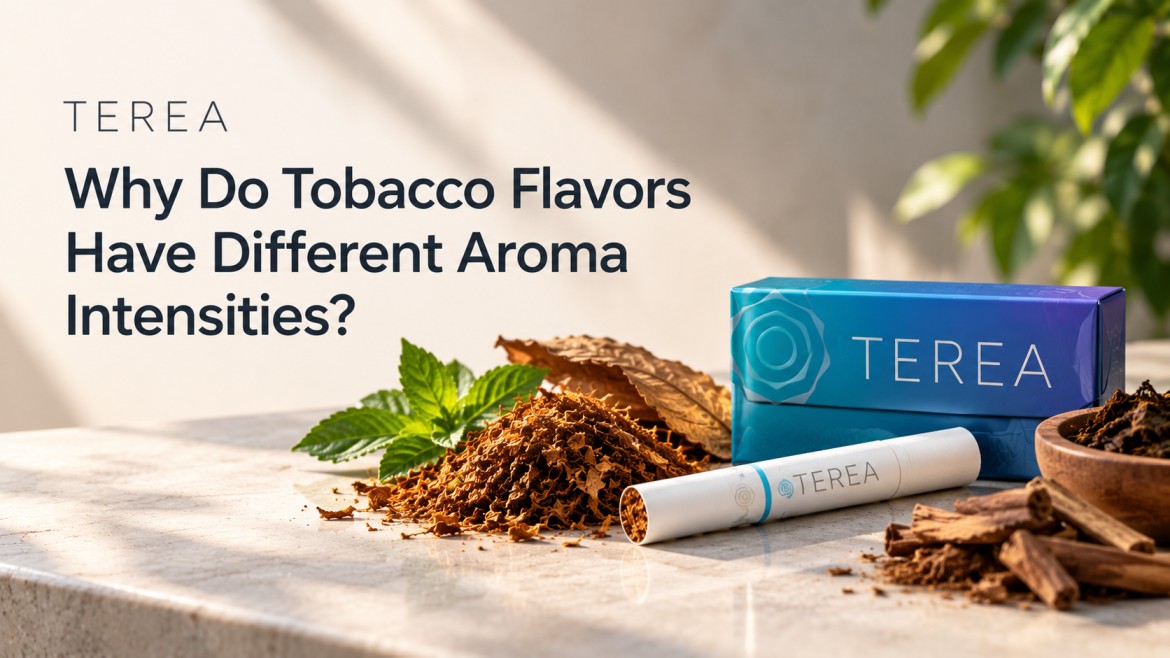
Open two packs of TEREA sticks from different regional editions and you will notice the difference immediately, even before the session starts. One smells warmer and woodier. Another has a sharper, brighter quality. A third barely announces itself at all until the heat kicks in. The tobacco products are in the same format, heated by the same IQOS ILUMA device, and made by the same manufacturer. So where does the aroma difference come from?
The answer involves several interacting factors: the tobacco variety itself, how it was grown and cured, how the blend was formulated, and what flavor ingredients were added. This article explains each of those factors and how they combine to produce the tobacco flavor aroma intensity differences that users across Dubai and the UAE notice regularly.
What Aroma Intensity Actually Means
Intensity vs Character: Two Different Things
Aroma intensity describes how strong or prominent a product’s smell is. Aroma character describes what kind of smell it is. These are separate observations and worth keeping separate. Two tobacco blends can have similar intensity but completely different characters. One might be strongly earthy, the other strongly woody, and both might register as equally pronounced without smelling anything like each other. A third blend might be mild in intensity but still carry a clearly identifiable toasted or nutty quality. Intensity tells you how much of a smell there is. Character tells you what that smell actually is.
Common Aroma Descriptors and What They Point To
The language used to describe tobacco aroma across product descriptions and user discussions clusters around a recognizable set of terms. These are sensory descriptions rather than precise chemical measurements:
- Woody: Aromas reminiscent of dry wood or timber
- Earthy: Soil-like, natural, or slightly organic in character
- Nutty: Warm, rounded, with a dry roasted quality
- Toasted: A roasted warmth, similar to baked goods or grain
- Herbal: Green, plant-like, botanical in character
- Spicy: A prickling or warming aromatic quality
- Sweet: Soft and slightly confectionery in character
- Cooling or Fresh: A clean, sometimes menthol-adjacent sensation
- Citrus: Bright, acidic fruit notes associated with lemon, orange, or similar
When you read a TEREA product description using terms like these, it is telling you what sensory category the aroma falls into rather than disclosing exact ingredients or chemical composition. Understanding how these categories arise helps make sense of why two sticks from the same range can smell completely different.
How Tobacco Leaf Variety Shapes Aroma
Different Varieties, Different Starting Points
Not all tobacco leaves are chemically identical. Different tobacco varieties and cultivars have different natural compositions, and those differences produce different baseline aromas before any processing or blending happens. Some varieties are naturally richer in compounds that produce woody or earthy notes. Others carry more of the precursors that develop into sweet or herbal characters during processing. The leaf itself sets the starting point that everything else builds from. This is part of why TEREA Amber editions from different regional origins can share a tobacco-forward identity while still smelling noticeably different from each other.
What Affects Leaf Character Before Harvest
The conditions a tobacco plant grows in also influence what ends up in the leaf. These variables cannot be fully controlled and shift between growing regions, seasons, and farms:
- Tobacco variety and cultivar : the genetic starting point
- Soil composition and nutrients : what the plant draws from the ground
- Climate and temperature : how the plant develops through the season
- Rainfall and humidity levels : moisture availability during growth
- Leaf maturity at harvest : how far chemical development has progressed
The same variety grown in a different climate or harvested at a different stage of maturity will produce leaves with different characteristics. This is part of why regional editions share a name but smell different. The blog on TEREA Tajikistan vs Kazakhstan regional flavors covers exactly this kind of regional difference in practical terms.
Growing Conditions and Curing: The Transformation Stage
How the Environment Sets the Foundation
Temperature and sunlight levels through the growing season influence how compounds develop within the leaf. Soil nutrients affect what the plant draws on during growth. Rainfall timing affects the concentration of compounds in the mature leaf. These are genuine variables that tobacco manufacturers account for when sourcing leaf for specific blend profiles. Country of origin on a product label tells you something about the market the product was developed for, not the exact growing location or aroma profile of every leaf inside.
How Curing Transforms the Leaf
Freshly harvested leaves undergo curing before becoming part of any finished product. Curing removes moisture and allows chemical changes to develop. Different curing methods produce different aroma outcomes:
- Flue-curing: Controlled indirect heat. Associated with bright, slightly sweet tobacco characters.
- Air-curing: Slow drying in ventilated barns. Tends to produce lighter, more neutral tobacco characters.
- Sun-curing: Direct sunlight drying. Extended light and heat exposure creates distinctive aromatic notes.
- Fire-curing: Hardwood smoke contacts leaves during drying. Associated with stronger, smoky aromatic characters.
After curing, leaves may be aged, conditioned, cut, and blended before becoming part of a finished product. Drying time, temperature, and storage conditions all affect which aromatic compounds are retained. The cumulative result of these steps is the aroma profile that reaches the end user.
Why Tobacco Blending Creates Different Aroma Outcomes
Blending Is Where the Profile Is Constructed
Most tobacco products are not made from a single leaf variety. Manufacturers blend different varieties and leaf grades to hit a target sensory profile. The proportion of each component directly influences the aroma balance. A blend weighted toward earthy, heavy leaf types produces a different aroma than one weighted toward lighter, drier varieties. A small addition of a leaf type with strong aromatic character can have a noticeable effect even if it represents a small percentage of the total weight.
Common Sensory Combinations in Blended Tobacco
Certain sensory combinations appear regularly across TEREA Silver and similar tobacco-forward editions because they reflect common blending approaches: woody and earthy together for fuller profiles, toasted and nutty for warmth and smoothness, herbal and lightly spiced for botanical character, and mild with slight sweetness for broader everyday appeal. The TEREA Amber Kyrgyzstan is a good real-world example of a warm, clean tobacco blend where woody and toasted elements are the dominant impression with no added flavors competing against them. By contrast, the Rich Edition adds Indonesian clove to a similar tobacco foundation, creating a significantly stronger and more complex aroma from what starts as a comparable base.
How Added Flavor Ingredients Change the Aroma
Flavor Additions Are Deliberate Formulation Decisions
Many tobacco products contain ingredients added specifically to create or modify the aroma profile. Menthol, fruit-inspired notes, citrus compounds, herbal ingredients, and sweet aromatic elements are all commonly used across the heated tobacco category. The intensity of an added aroma depends on the concentration and how it interacts with the tobacco base underneath. A high menthol concentration will dominate the aroma entirely. A lighter citrus note might only be detectable in the first few draws before the tobacco base reasserts itself.
Natural vs Added Aroma Compounds
A woody or earthy note can arise from the tobacco variety and curing method without any added ingredient. A bright citrus note almost always indicates that a flavoring ingredient has been introduced. Product descriptions typically use sensory language without specifying which aromas are natural and which are added. This is part of why the TEREA Purple Wave editions across different origins can share the same general berry-menthol identity but smell noticeably different from each other the tobacco base underneath the added flavor differs between regional versions. For users exploring how added aroma profiles differ across the TEREA range, the guide on moving from tobacco to fruity TEREA profiles covers the practical flavor differences clearly.
Why Some Tobacco Products Smell Stronger Than Others
The Factors That Drive Perceived Intensity
Several interacting variables determine how strong a tobacco aroma seems:
- Aromatic compound composition: Different blends contain different combinations and concentrations of smell-active compounds.
- Compound volatility: Some aromatic compounds evaporate more readily at room temperature. Highly volatile compounds announce themselves immediately; less volatile ones emerge gradually during heating.
- Moisture content: The moisture level of the tobacco material influences how and when aromatic compounds are released.
- Processing conditions: Curing, drying, and storage affect which aromatic compounds are retained in the finished material.
- Flavor formulation: Added ingredients can amplify specific aroma characteristics significantly, making products with identical tobacco bases smell quite different.
- Product design: The physical structure of the stick and the delivery system affects how aromatic compounds are released during use.
How Heating Technology Affects What You Smell
Heating Conditions and Aroma Release
The way a product heats its tobacco has a meaningful effect on the aroma that reaches the user. Different heating conditions affect the volatilization of aromatic compounds. A compound that releases at a lower temperature is more prominent in systems operating at lower heat levels. A compound requiring higher temperatures might barely register in one format but come through clearly in another. This is part of why the same tobacco blend can present differently depending on the product format and heating method.
SMARTCORE Induction, TEREA Sticks, and Aroma Consistency
IQOS ILUMA devices use the SMARTCORE induction system, which heats tobacco from within the sealed TEREA stick through a metallic element rather than through an exposed blade or external flame. The sealed design means the tobacco material heats within a controlled internal environment across every session. Because aromatic compounds are released within this sealed structure, the aroma presentation is more consistent session to session compared to formats where external air plays a larger role. This is part of why users find TEREA Turquoise editions and other flavored variants reliable in their aroma character from pack to pack. For users comparing the full range across different aroma profiles, the variety available at Tereazone reflects exactly the kinds of formulation differences this article covers.
Why Two People Smell the Same Product Differently
Perception Is Inherently Personal
Individual smell sensitivity varies significantly. Some people detect certain aromatic compounds at very low concentrations while others need significantly higher concentrations to register the same smell. This is partly genetic, partly the result of accumulated experience, and partly influenced by current health and environmental conditions. Someone unfamiliar with clove tobacco may find a Rich Edition intensely aromatic while a regular clove tobacco user finds it moderate. A user new to menthol may find a TEREA Turquoise Kyrgyzstan overwhelming while a long-term menthol user considers it mid-range. Previous exposure and context matter as much as the product itself.
Aroma Intensity vs Tobacco Strength: Not the Same Thing
This is one of the most common points of confusion among users exploring the TEREA range. Aroma intensity describes how prominent a product’s smell is. Tobacco strength is a separate characteristic related to tobacco composition and nicotine content. A product can have a pronounced, complex aroma while being relatively light in tobacco character. Equally, a product with a mild, understated aroma might carry more tobacco presence than its quiet smell suggests. The TEREA Silver Kyrgyzstan is a practical example: a light tobacco body with a gentle cool finish that does not announce itself particularly strongly but still delivers a recognizable tobacco session. The TEREA Turquoise Kyrgyzstan, already linked above, is equally light in tobacco body but much more prominent in aroma due to its consistent menthol character. Same general category, very different aroma intensity, similar tobacco weight. Treating aroma descriptions and strength descriptions as separate pieces of information gives a more accurate picture of what to expect.
Reading Aroma Descriptions on Product Packaging
Product descriptions use sensory terminology to communicate aroma character in shorthand. These terms are descriptive and vary between manufacturers, but a few are consistent enough to be useful guides:
- Smooth: A less sharp or less pronounced sensory impression overall
- Toasted: Warm roasted or baked-grain aromatic notes
- Woody: Dry, timber-adjacent aroma character
- Earthy: Soil-like or natural, sometimes damp organic notes
- Herbal: Green, plant-like, botanical in quality
- Cooling: A fresh, often menthol-associated sensory impression
- Citrus: Bright, lemon or orange-adjacent notes
These terms describe what a product’s aroma points toward rather than disclosing exact ingredients or formulation. Reading them as directional guidance rather than precise specification is more accurate, and comparing a description against your own experience with a single test pack is always more informative than the packaging alone. The blog on what to expect from TEREA Tajikistan flavors is a useful example of how sensory descriptions translate to actual session experience.
Why This Matters When Buying in the UAE
Most users ordering online in Dubai and across the UAE rely on product descriptions and category names to make their choices without the ability to try first. Understanding where aroma intensity comes from gives you a better frame for reading those descriptions accurately. A product described as woody and toasted is telling you something real about its tobacco blend and curing method. A product described as cooling and citrus-fresh is equally telling you something real about its flavor formulation. The more you understand what those descriptions point to, the better you can match a product to what you actually enjoy. Buying a carton based on a name alone, without understanding the aroma profile behind it, is where most mismatches happen. The guide on buying TEREA by the carton in Dubai covers the practical side of making that call before committing to a larger order.
Frequently Asked Questions
Why do some tobacco flavors have a stronger aroma than others?
Differences in tobacco composition, curing method, blending, and added aromatic ingredients all influence how noticeable a tobacco aroma is. Highly volatile compounds and higher concentrations of aroma-active ingredients tend to produce stronger-smelling products.
Does tobacco variety affect aroma intensity?
Yes. Different tobacco varieties have different natural chemical compositions that contribute to variations in their aroma character and intensity, even before any processing or flavor additions take place.
Does curing change the smell of tobacco?
Yes, significantly. Curing method, temperature, duration, and storage conditions all influence which aromatic compounds are developed, retained, or reduced in the finished tobacco material.
Is aroma intensity the same as tobacco strength?
No. Aroma intensity describes how prominent a product smells. Tobacco strength is a separate characteristic related to tobacco composition and nicotine content. A strongly aromatic product is not necessarily a stronger tobacco product.
Why do woody and earthy tobacco aromas smell different?
They are different sensory profiles associated with different aromatic compound combinations. Both can arise naturally from the tobacco leaf and processing without any added flavor ingredients involved.
Can heating technology affect tobacco aroma?
Yes. Heating conditions influence which volatile aromatic compounds are released and at what rate. The SMARTCORE induction system in IQOS ILUMA devices heats tobacco within a sealed stick, which contributes to consistent aroma presentation across sessions.
Why do two people perceive the same tobacco aroma differently?
Individual smell sensitivity, previous aroma experience, environmental conditions, and current health all affect aroma perception. What smells strong to one person may seem moderate to another with a different sensory baseline.
Putting It All Together
Tobacco flavor aroma intensity is not a single variable you can point to and adjust. It is the outcome of everything that happened to the tobacco before it reached your device: the variety of leaf, the soil and climate it grew in, the curing method applied, the blending decisions made during formulation, the flavor ingredients added on top, and the way the heating system interacts with all of that during a session. Change any one of those factors and the aroma changes with it. This is why two TEREA editions from the same manufacturer, heated on the same IQOS ILUMA device, can smell entirely different from each other.
For users choosing between TEREA editions in the UAE, the practical takeaway is straightforward. Aroma descriptors on packaging are genuine signals about what a product will smell like, not marketing language. Woody and toasted means something real about the tobacco blend. Cooling and citrus means something real about the flavor formulation. Aroma intensity and tobacco strength are separate pieces of information and should never be conflated. And because perception is personal, the most reliable way to know whether a particular aroma profile suits you is still to try a single pack before committing to a carton. The full TEREA range is stocked at Terea Dubai across multiple regional editions for adult customers across Dubai and all UAE emirates.