Introduction: The Mystery Behind “One-Flavor Loyalty”
If you’ve spent any time around heated tobacco users in Dubai, Abu Dhabi, or Sharjah, you’ve probably noticed something interesting.
Most people don’t actually switch flavors often.
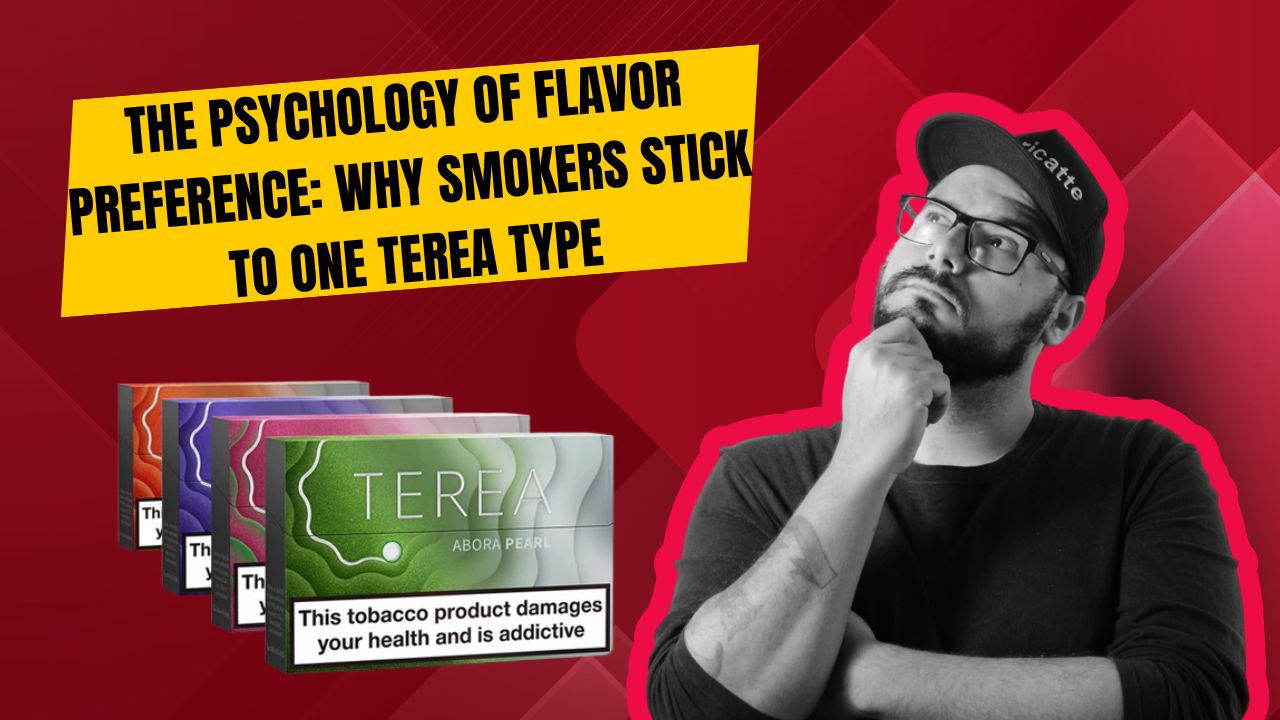
They might try a few TEREA variants at first, explore menthol, classic tobacco, or lighter blends but eventually, something changes. One flavor quietly becomes “the one.”
And from that point onward, everything else feels… temporary.
It raises a simple but fascinating question: Why does the brain reject variety after a point, even when options are available?
The answer isn’t just about taste. It’s about psychology, habit formation, and how the brain learns comfort. Flavor preference is not random, it’s deeply emotional and highly conditioned.
What Is TEREA and Why Flavor Matters
TEREA sticks are designed for use with IQOS ILUMA devices Like Iluma i One, Iluma i Prime, Iluma i Standard, offering a heated tobacco experience instead of traditional combustion.
Unlike cigarettes, there is no burning. Instead, the device heats the tobacco from within, producing a consistent flavor profile with each stick.
What makes TEREA interesting is not just the technology, it’s the flavor system.
Across UAE cities like Dubai and Abu Dhabi, users typically choose between:
- Classic tobacco profiles
- Menthol and cooling blends
- More aromatic, layered variations
But here’s the key detail most people overlook:
Flavor in heated tobacco isn’t just taste. It becomes part of the daily rhythm.
Morning coffee, work breaks, evening relaxation—each moment gets paired with a consistent sensory experience. Over time, that pairing becomes routine.
Explore why Terea flavor feel strong in Morning: Why Some TEREA Flavors Feel Stronger in the Morning Compared to Evening Use
The Brain-Flavor Connection: How Taste Becomes Habit
The human brain is wired to repeat what feels rewarding.
Every time a user consumes a familiar flavor and feels satisfied, dopamine reinforces that experience. It quietly tells the brain: “Do that again.”
But something deeper happens over time.
The brain doesn’t just remember the flavor. It links it to emotional states:
- Relaxation after stress
- Focus during work
- A sense of pause in a busy day
So the first flavor someone genuinely enjoys often becomes the default, not because it’s objectively better, but because it became emotionally “tagged” first.
In places like Dubai Marina offices or Abu Dhabi workplaces, where routines are strict and fast-paced, this reinforcement becomes even stronger.
Sensory Adaptation: Why Variety Feels “Wrong” Over Time
At first, switching flavors feels exciting.
But over time, something changes.
This is sensory adaptation, the brain adjusting itself to a familiar stimulus.
Once a user becomes used to one flavor profile, any deviation can feel:
- too strong
- too mild
- or simply “off”
Even if the new flavor is high quality.
Why? Because the brain has already calibrated what “normal satisfaction” feels like.
So when something doesn’t match that internal benchmark, it gets rejected, not consciously, but instinctively.
The Comfort Loop: Routine, Ritual, and Identity
In UAE cities where daily life moves quickly, routines matter.
And smoking or heated tobacco use often becomes part of that routine—not just physically, but emotionally.
Over time, a pattern forms:
- same time
- same place
- same flavor
This creates what psychologists call a comfort loop.
And within that loop, identity begins to form:
- “I’m a menthol user”
- “I only prefer smooth tobacco”
It stops being just a preference. It becomes self-definition.
Nicotine Reinforcement and Flavor Anchoring
Nicotine strengthens habit loops, but flavor gives them structure.
Over time, users don’t just associate satisfaction with nicotine they associate it with a specific flavor profile.
That’s why switching can feel “wrong,” even when nicotine levels remain unchanged.
The brain is not just reacting to chemistry, it’s reacting to expectation.
If the flavor changes, the expectation breaks. And the satisfaction feels incomplete.
Decision Fatigue: Why Users Stop Experimenting
Having too many choices sounds like a good thing, until the brain gets tired of choosing.
This is decision fatigue.
Instead of comparing flavors every time, the brain simplifies the process:
“Just use the usual one.”
In fast-moving environments like Dubai’s work culture or Sharjah’s daily routines, people naturally prefer mental shortcuts.
So even when multiple TEREA options are available, one becomes the “safe default.”
Social Influence and Preference Reinforcement
Flavor preference is also shaped socially.
People talk. They share. They influence each other.
In workplaces, cafés, and social gatherings across Abu Dhabi and Dubai, certain flavors gain popularity simply because they are commonly used.
Online reviews and peer recommendations also reinforce this effect.
If everyone around you prefers a specific TEREA type, your brain subtly registers it as “correct.”
Even without realizing it.
The 3 Stages of TEREA Flavor Behavior
Most users don’t just “pick a flavor and stick to it” instantly. In reality, there’s a clear behavioral journey that happens over time.
Stage 1: Exploration
This is where users try different TEREA types, menthol, classic tobacco, lighter blends—just to see what feels right. Everything feels new, and comparison is constant.
Stage 2: Confusion
After a while, nothing feels “perfect” anymore. Switching starts feeling inconsistent, and users begin questioning what they actually prefer.
Stage 3: Loyalty
Eventually, one flavor becomes the default. The brain stops comparing and starts repeating—this is where habit takes over preference.
Morning vs Evening Flavor Psychology
| Time | Brain State | Flavor Preference | Reason |
| Morning | Needs energy | Strong / menthol / bold | Brain seeks stimulation and alertness |
| Evening | Relaxed / tired | Smooth / mild | Brain prefers calm and comfort |
| Insight | Changes through day | Same flavor feels different | Perception depends on brain state, not flavor itself |
Why Menthol Users and Tobacco Users Think Differently
Menthol and tobacco users often develop very different expectations.
- Menthol users tend to prioritize freshness, sharpness, and a cooling sensation. Their brain associates satisfaction with a “clean reset” feeling.
- Tobacco users, on the other hand, usually prefer depth, warmth, and consistency. For them, satisfaction is linked to stability rather than stimulation.
This difference is psychological more than sensory—each group trains the brain to expect a specific type of reward experience.
Best Flavor to Try
There is no universal “best” TEREA flavor because preference is highly personal and shaped by habit, environment, and mood.
However, a good starting approach is:
- Try TEREA Regular / Rich Regular if you prefer stability and a smooth classic tobacco experience
- Try TEREA Menthol / Black Menthol if you prefer freshness and a stronger cooling sensation
- Try TEREA Sun Pearl or Purple Wave variants if you want a lighter, more layered and slightly aromatic experience
The key is not finding the “best” flavor but finding the one your brain naturally stops questioning.
Environmental Conditioning
Context matters more than most people think.
A flavor doesn’t exist in isolation it exists in a situation.
For example:
- Morning coffee may pair better with stronger profiles
- Outdoor heat may make lighter flavors feel more comfortable
- Evening relaxation may favor smoother blends
Over time, one flavor becomes associated with the “ideal moment.”
And that moment repeats.
So the flavor repeats too.
The Paradox of Choice in Heated Tobacco
More options don’t always create more satisfaction.
In fact, too much variety often leads to confusion rather than enjoyment.
This is why many users eventually return to their first preferred flavor, it feels stable, predictable, and mentally effortless.
The trade-off becomes clear:
- novelty vs comfort
- exploration vs consistency
Most people, especially in structured urban lifestyles like in UAE cities, choose comfort.
Can Smokers Change Their TEREA Preference?
Yes but not easily.
The brain resists breaking established patterns.
However, change is possible through gradual exposure:
- alternating between two flavors
- using different flavors in different environments
- slowly shifting the dominant preference
But sudden switching rarely works, because the brain keeps comparing everything to the “original favorite.”
Consistency has to be retrained, not forced.
Marketing Psychology Behind Flavor Retention
There’s also a design perspective here.
Brands behind heated tobacco products like IQOS intentionally build flavor consistency into their ecosystem.
Why?
Because predictable satisfaction builds loyalty.
When a flavor always delivers the same experience, the brain trusts it.
And trust turns into repetition.
Repetition turns into preference.
Key Takeaways: Why One Flavor Wins
At the core of it, everything comes down to three things:
- Habit formation
- Dopamine reinforcement
- Identity building
When these three align, flavor stops being a choice, it becomes a routine.
And routine almost always beats experimentation.
Conclusion
Most smokers don’t stick to one TEREA flavor because they lack options.
They stick because their brain has already made the decision for them.
Over time, flavor becomes less about taste and more about psychological comfort—a small, familiar moment in an otherwise busy day.
And that leads to a simple truth:
You don’t just choose a flavor. You build a habit around it.
If you’re exploring different TEREA types in Dubai, Abu Dhabi, or anywhere in the UAE, the goal isn’t just to find something new.
It’s to understand what your brain has already learned to prefer and why.
FAQ: The Psychology of Flavor Preference & TEREA Loyalty
Why do most TEREA users stick to one flavor instead of switching?
Because the brain forms a habit loop and associates one flavor with consistent satisfaction and comfort.
Is flavor preference in TEREA really psychological or just about taste?
Mostly psychological, memory, emotion, and routine shape long-term preference more than taste alone.
Why do new TEREA flavors sometimes feel weaker or too strong?
Because the brain compares them to a familiar baseline, making anything different feel off or unbalanced.
Can someone actually change their preferred TEREA flavor?
Yes, but only gradually through repeated exposure and slow adjustment of habits.
Does nicotine level affect flavor preference?
Nicotine supports satisfaction, but flavor expectation and sensory memory play a bigger role.
Why do people in UAE cities like Dubai and Abu Dhabi often prefer one consistent flavor?
Busy routines and fast-paced lifestyles favor consistency and reduce daily decision-making.
Is it normal to feel disappointed when switching TEREA flavors?
Yes, it happens due to expectation mismatch between the familiar and the new experience.
Do social influences affect TEREA flavor choice?
Yes, friends, coworkers, and trends often shape early and long-term flavor preferences.
Why does the first liked flavor feel the “best” long-term?
Because it creates the strongest emotional and sensory memory anchor in the brain.
What is the main takeaway about flavor loyalty in TEREA users?
Flavor loyalty is driven by habit, memory, and psychology, not just taste.
Where can I buy original TEREA sticks in UAE including Dubai, Abu Dhabi, Sharjah, and other cities safely and reliably?
You can buy TEREA from Terea Zone trusted online Store delivery services across the UAE.